






Explanation of a brainteaser: the situation in Afghanistan
- 1 févr. 2015
- 4 min de lecture
The War in Afghanistan? Taliban bombing local village? Young women abducted in Afghanistan? These are commons headlines that made the news when concerning Afghanistan. However, thinking about it made me realise how complicated the situation can be to understand. I will then try to explain how did it all started and where do they stand now.
Triggering factors: Taliban and Al Qaeda
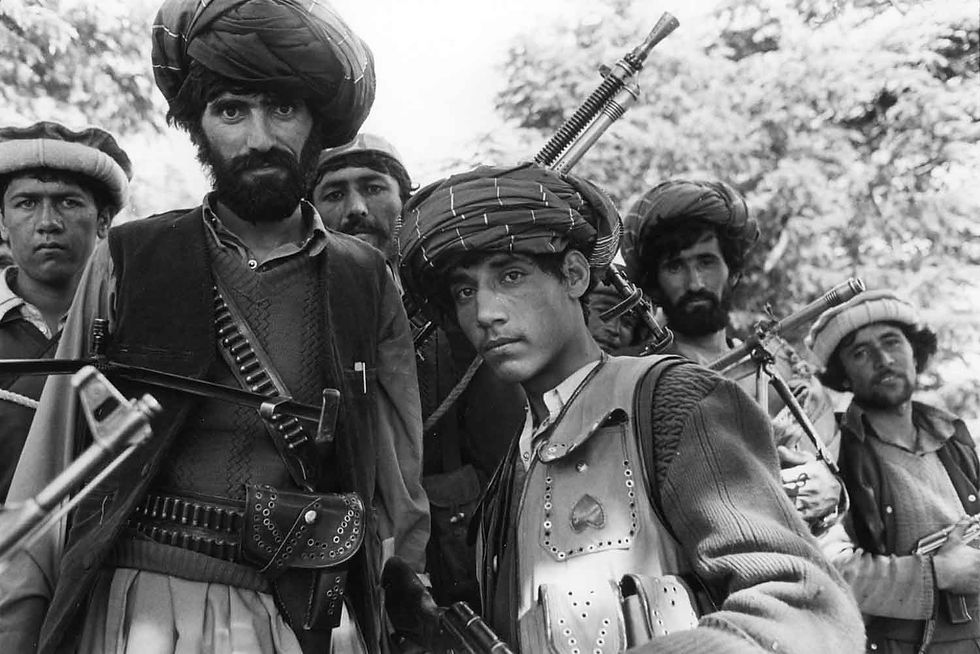
It all started in 1996: year during which Taliban seized control of Kabul and then of two third of the country. It is a political movement based on Islam, which governed the country with their interpretation of Islamic law to turn Afghanistan into the world’s purest Islamic country. Even if they were highly criticised in the world, mostly because of their violence towards women, no one took actions against them. During their period as the head of state, they allowed Al Qaeda members to have training camp in Afghanistan: that was the first step toward the war.
The second, and major, step toward the war was the 9/11 terrorist attacks which caused the death of 3 000 people. After the massacre, investigations were done and led the US government to believe in the implication of Al Qaeda, and that the head of this organisation, Osama Ben Laden, was at the origin of the attacks.
After these two triggering factors, there was only one step left before the deathly war that we have all heard about, at least once in our lives.
2001 – 2011: International Actions

After the attacks on the Twin Tower in New York City, Afghanistan underwent international pressures to hand Ben Laden, but refused to cooperate or help in the arrest of the terrorist. This led us to October 2001: month during which American and British bombs started falling on Afghanistan with two targets in the sights: Al Qaeda’s fighters and Taliban.
However he was only found 10 years later (2011) during a raid, which led to his death. But during these 10 years, a lot have been done and a lot was still to achieve:
*Security: January 2002 was marked with the deployment of the NATO-led International Security Assistance Force (ISAF); they are foreign peacekeepers aiming to fight against Taliban. A year later, NATO took Kabul’s security under its control. A total of 100 000 US troops (in 2009) is present all over the country to train the Afghan army and to support the civilian.
*Politics: Whereas in 2002, only the Grand Council take part in the head of state elections, around 12 millions of Afghans (75% of the population) took part in the presidential elections in 2004
However, despite these improvements, attacks and shooting are common in the country and it is estimated that, between October 2001 and June 2011, between 30 400 and 45 600 people (civilians, military, police, insurgents…) were killed directly because of the war. But we must not forget that the war can also kill indirectly: through malnutrition, lack of access to drinkable water, lack of access to medicine, diseases, poverty, etc…
3 Years of transition, 3 years to prepare the future

Although Ben Laden was killed in 2011, US and British troops stayed in Afghanistan to help building a stable nation and continue fighting against Taliban and Al Qaeda’s fighters, side by side with the ISAF. Numerous actions are set up to achieve this goal such as training Afghan armed force and police, guarding important buildings, initiating street patrol in the most dangerous part of the country.
However, the American and British troops, as well as ISAF, had to prepare Afghanistan for the after 2014, for after the departure of the international troops. This period was centred on the political situation, an attempt of political reconciliation with Taliban, the security…
The presidential election took place in April 2014 and “was marred by widespread fraud, repeating serious problems seen in previous elections since the Taliban regime was ousted from power in 2001” (AFP – 26 September 2014). Despite these regretful events, it was also marked with an agreement: a “unity government” deal. This meant that Ghani, winner of the election, would serve as the next president; but also that Abdullah, his opponent, would become the chief executive of the government (it can be compared to the role of a prime minister).
The security was also a big issue during this transition considering that Taliban had increased the frequency of attacks on important political figures (both national and international). The security could not be only assured by international troops and ISAF, so since June 2011 it slowly became the responsibility of the Afghan government and the Afghan National Security Forces (ANSF). The final step of transition for the army was in June 2013 but British and American troops stayed until end of 2014 to continue training the armed forces and police.
The After 2014; what happens now?

According to the telegraph that did a complete article about the future in Afghanistan; the major issue in the country right now is the security. The number of attacks and violent action across the country rose, and it is not even surprising. Now that the international military presence has decreased considerably, the Taliban didn’t hesitate to organise new terrorists attacks and suicide bombing.
This rise in the violence is one of the major problems that could influence the future of Afghanistan: indeed the ANSF is incapable of containing them:
*Firstly because the ANSF is mostly situated in cities and trade arteries of the country, whereas Taliban mostly control the countryside. The Telegraph even said “Afghan soldiers often become sitting ducks for the Taliban.”
*The second reason is linked to the economic situation of the country: the army is suffering from a lack of equipment; and more than just that the government has been incapable of paying its soldiers.
The economy of the country is the second main worrying aspect: the government has been struggling to keep their promises to create jobs and to create a new and stable economy.
Link to learn more:
- Telegraph article for the after 2014 situation: http://www.telegraph.co.uk/news/worldnews/asia/afghanistan/11259084/Will-Afghanistan-fail-as-a-state-after-2014.html


Commentaires