





Words are not the only one that counts.
- 4 nov. 2014
- 2 min de lecture
Ethics in journalism focused on the facts published and their accuracy, but it doesn’t mean that it does not concern anything else than the words in an article: the pictures can also be a part of ethical problems or dilemmas.
Firstly, and even if I believe it is more about common sense, can a journalist take pictures found on social medias? We all know that when setting up an account on a social media such as Facebook, Twitter, Instagram etc., our pictures might be found on the Internet by anyone; however does this mean that journalist can publish them? Can they use them? In my opinion, journalists does not have the right to take the pictures unless they asked the family, who agreed and only if it’s absolutely necessary to have a picture of the person in the article.
I strongly believe that these pictures are a part of the private sphere, and even if they can be found on the Internet, it is not the same thing than exposing them for all to see in the newspaper. The only justification would be if the person is missing, but the family would still have to agree on publishing this picture.
Pictures in newspapers can also provoke another problem: because pictures are strong, they can talk more than words. Of course it can move the people in a good way, by motivating them, but it can also upset people or shock them. However, in this case, if the picture is shocking because it is about war or death, the newspaper can be accused about exploiting the pain. The dilemma lay in whether or not publishing the picture or. To answer that question, Al Tompkins from the Poynter Institute in the U.S. said that you have to ask yourself some questions before publishing any pictures: “What is the real journalistic value of the photographs? What do they prove and why are they news? Do they dispel or affirm information the public had prior to seeing the images?”
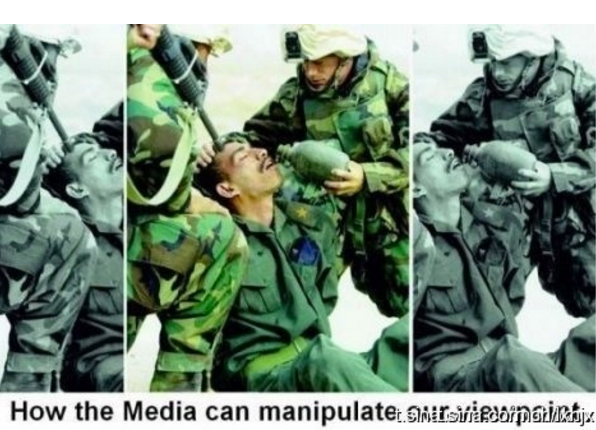
The last problem that is caused by photographs is the way the journalists can use them, and particularly, the way they edit them. You can change the size, the shape, and the colour, add or delete part of the picture etc., but is it ethical? In my mind, I think that changing the picture in a certain way that the message it shares is different is unethical because it is the same as changing a quote, or altering the truth. As long as the meaning is changed or manipulated, it is as unethical as writing a lie, an incomplete story or an edited quote.

extracted from the blog http://aimfortheheart.com by Al Tompkins
Links related :


Commentaires